Categories
Leaflets

How we can sow the seeds of a better food system

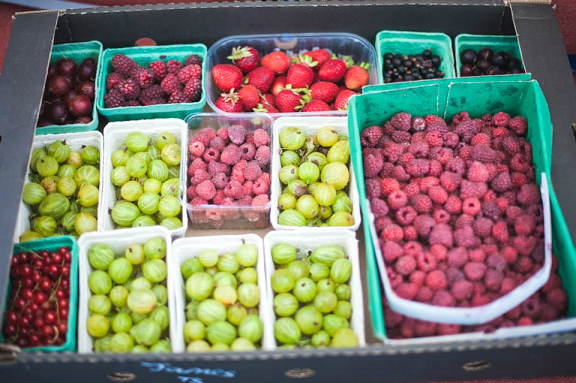
Fresh Berries

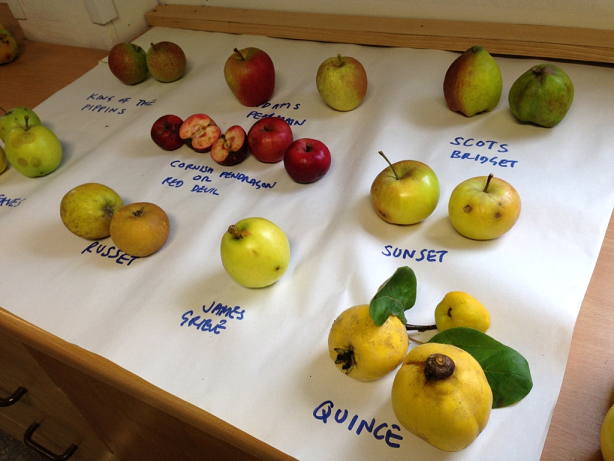
From apples, neeps and pumpkins to learning about traditional grain crops, this harvest season has been an opportunity to find out more about the growing community food movement in Scotland. This month I’m highlighting a campaign from the Scottish Farm Land Trust, running until 30th November, seeking to make more land available for ecological farming.

For so many in today’s world, there is an alarming disconnect between the food on our plates and how it got there. We know so little about where our food comes from and how it was produced.


Since the 1950s, farming practices have shifted away from localised, traditional methods of food production towards mechanised industrial-scale chemical-intensive monocropping. To produce food on an industrial scale, you need to take a variety, make it uniform and stable, and use this to create a monoculture – which doesn’t work without the use of artificial fertilisers and chemical pesticides. This goes against the fundamental nature of living things which are diverse and able to adapt to their environment.


Rather than an abundance that nourishes us all, food is seen as a commodity. This is not good for food, it’s not good for the planet and it’s not good for us.

A Global Food System

Across the globe, this method of farming has undermined or eradicated diverse and self-contained rural economies, traditions and cultures, wedding farmers and regions to a wholly exploitative system of neoliberal globalisation and inequality. Globally, we have a food surplus in the West – alongside a public health crisis of obesity and type two diabetes – and a food deficit in areas across the Global South, with millions starving. We waste over a third of the total amount of food produced.

The increasingly globalised and geo-politicised food systems that transnational agribusiness promote are not only not feeding the world, they are responsible for some of the planet’s most worrying environmental crises. We’re depleting our soils, we’re cutting down our forests and causing floods, we’re using unsustainable quantities of water, we’re killing our wildlife and destroying the biodiversity on which all farming ultimately depends.


The management of our food systems will determine whether agriculture helps to mitigate or contributes to climate catastrophe:

“Climate change isn’t just about greenhouse gases – it is about land rights, agriculture, natural resources, and the right to manage them for the greater good. The food system is a central part of this fight – what we eat is responsible for more carbon pollution than all the world’s planes, trains, and automobiles. Between the forests and fields converted to agriculture and pollution directly from farming, what we eat accounts for nearly a third of all the gases contributing to climate change.” ‘Food, Farming and the Climate Crisis: How We Can Feed People and Cool the Planet,’ Landworkers Alliance 2019

Changes in temperature, precipitation patterns, drought and extreme weather events are already affecting agricultural productivity both globally and locally. In the face of the unparalleled threat of climate unpredictability on our food supply, we must build local and community resilience and we must call for a dramatic change in our methods of production and distribution.
The Seeds of Agroecology

The challenge of the 21st century is to meet the needs of all within the means of the planet: in other words, to ensure that no one falls short on life’s essentials (from food and housing to healthcare and political voice), while ensuring that, collectively, we do not overshoot our ecological limits. This is the premise of Kate Raworth’s Doughnut Economics (2017).
Categories
Democracy Leaflets

What passes for democracy for Scotland in the UK

The Conservative party with 6 MPs from Scotland
effectively is ruling over, overrules,
the SNP party in Scotland which has 48 MPs
out of a total 59 seats in Scotland.

Why do Scottish voters accept that?

For England the equivalent of Scotland’s level of democracy would be

A UK government party with 54 MPs from England
effectively ruling over, overruling,
the largest party in England with 433 MPs
out of a total 533 seats in England.

Would English voters accept that?

For details and information sources see www.scotlandthefacts.com leaflet 02

Categories
Education Leaflets

Leaflet 4

Categories
Democracy Economy Leaflets

Leaflet 3

Categories
Economy Leaflets Welfare

Leaflet 2

Categories
Leaflets

Oil and Gas Revenue per person in Scotland

Revenue per person options from oil and gas per person in Scotland.

Scotland as existing part of the UK£5679 per person
What could have been had Scotland been independent:
Industry privatised as in current UK£53,931 per person
run with public ownership like Norway £146,103 per person

As part of the UK

For the period from 1969 to 2015
The UK revenue from oil and gas was $470 billion (£367 billion). Shared throughout the UK for each Scot as a UK citizen that equates to £5,679 per person.

As an independent Scotland

Had Scotland been independent it would have had about an 80% share of the sales income of UK oil and gas. Assuming the industry was privatised as it was by the UK Conservative government Scotland didn’t vote for, the revenue return achieved was $11 per barrel of oil so the revenue to Scotland would have been £239 billion. Shared within Scotland, that would have been £53,931 per person.

If Scotland had managed oil like Norway, retaining public ownership and gained $29.8 per barrel, the revenue to Scotland would have been £770 billion. Shared within Scotland, that would have been £146,103 per person.

Populations 2018 released June 2019

Population estimates – Office for National Statistics (ons.gov.uk)

Categories
Leaflets

The correct answer is E

ouyouybouybouybouy

ouybouygouygouygo8ygoy

Categories
Economy Leaflets

Scottish Economic History

Scotland’s positive contribution to the UK Economy.

The Scottish economy has made a positive contribution to the UK economy for decades. If the UK Government handled it differently this contribution could have been much greater.

Between 1979 to 1995 inclusive Scotland paid £26.7 billion more to the London Exchequer than it had received. Source This works out at £5,080 approx. for every Scot.  This could potentially have been much greater (see below).

From 1999 to 2014 inclusive Scotland paid more tax per person than the UK average by a total £12,200 per person (this includes from the countries’ geographic share of oil and gas which could have been much greater – see below). See Table E.2 in source

If the UK Government had handled oil and gas more effectively the resultant revenue could have been much higher.  

Since oil was discovered in the North Sea in 1969 the barrels of oil equivalent (boe) produced by the UK and Norway were similar but revenue generated was very different.

Norway             UK
Boe produced 40 billion 42.8 billion
Revenue generated  $1,197 billion $470 billion
Revenue per boe     $29.8  $11

Source

Why is this? Two factors are:• by international comparison oil company tax treatment by the UK Government is generous.
• The UK’s need to try to meet current account spending and reduce the budget deficit leads to maintaining oil production even while world oil prices are low, while Norway strategically manages production in relation to the current oil price.

This in part explains why Norway’s ‘Government Pension Fund Global’ is now worth over £133,000 per person while here, as part of the UK, each person’s share of the national debt is over £27,000.(For population statistics click Population statistics source Then click ‘Mid 2016’ then ‘open’ then select table ‘MYE04’.)

From 2005 to 2015 inclusive the Balance of Trade in goods with all nations (which excludes: services, tourism and oil and gas exported direct from offshore platforms) shows Scotland exported £50,463 million (38%) more than it imported, equivalent to £9592 per person. England imported £1,117,901 million (53%) more than it exported, equivalent to -£21,180 per person.

Source Click box at ‘Archive Year’.  At ‘UK Regional Trade Statistics Release’ ‘Quarter 4’ click ‘View Release’. At bottom of table click ‘EN’ tab for English figures and ‘SC’ tab for Scottish figures.

From 2005 to 2015 inclusive the Balance of Trade in goods with EU nations Scotland exported £33,070 million (71%) more than it imported, equivalent to £6301 per person. England imported £603,803 million (55%) more than it exported, equivalent to -£11,404 per person.

Source Click box at ‘Archive Year’. At ‘UK Regional Trade Statistics Release’ ‘Quarter 4’ click ‘View Release’. At bottom of table click ‘EN’ tab for English figures and ‘SC’ tab for Scottish figures.

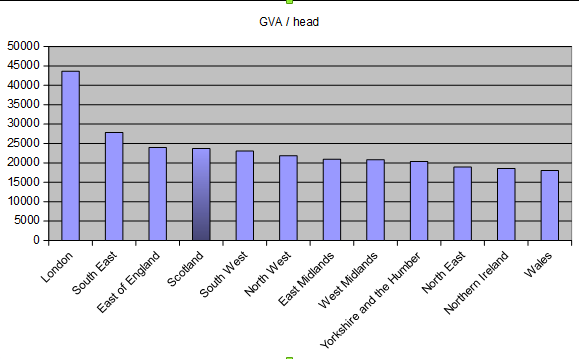
Gross Value Added (GVA) is a measure of the increase in the value of the economy due to the production of goods and services. According to 2017 data, even although North Sea oil and gas are not assigned to Scotland but as “Extra region” – not to a specific nation or region, Scotland has a higher GVA per head than any English region other than London and the South East. Source Scroll down to Table 1 and see column ‘GVA per head’.

Categories
Leaflets

Protected: Revenue and Trade

This content is password protected. To view it please enter your password below:

Categories
Leaflets

Best-performing NUTS1 Regions in UK (GVA per capita)

ONS publishes data which illustrates the best-performing areas in UK, in terms of Gross Value Added (GVA) per capita. The areas are the 12 NUTS1 regions of the UK. As the graphic shows, Scotland compares well with any of these regions outwith the Capital Region and others in south east of England.